
Why storytelling isn’t just for novelists


If you had asked me ten years ago where I’d be today, I would’ve told you I’d still be teaching full-time in the School of Communication at Illinois State University.
At that point in my life, I was all in on higher education. I loved the classroom, loved working with students, and couldn’t imagine a career that didn’t involve standing at the front of one.
What I never would’ve predicted was becoming a published author. Or hosting a podcast. Or giving a TEDx talk. Or coaching a youth softball team. Or finding myself in Corporate America in the world of communications and public relations, helping an insurance company tell their story.
None of those chapters were part of the plan. But looking back now, I realize there’s one thread that’s connected every step of the journey.
Storytelling.
For years, I thought these were different paths. Communications. Teaching. Writing. Each one seemed to lead somewhere unique. Now I realize they were all leading me toward the same purpose. They've always been different expressions of the same thing: storytelling.
Storytelling is more than writing fiction
When people hear the word storytelling, they often picture a novelist hunched over a laptop, dreaming up fictional characters and happily-ever-afters. But after years working in communications, public relations, higher education, and now external affairs, I’ve realized storytelling isn’t reserved for authors. It’s one of the most valuable skills any professional can develop.

Every day, we tell stories.
A leader tells the story of where an organization is headed. A public relations professional tells the story behind a brand. A teacher tells stories that make difficult concepts easier to understand. A coach helps young athletes rewrite the stories they believe about themselves.
Those stories influence decisions. They build trust. They create connections.
Facts matter. Data matters. Strategy matters. But stories are what people remember.
I didn't realize that when I was teaching.
I thought my job was to explain theories, assign readings, and prepare students for careers in communication. But semester after semester, I noticed something interesting. Students rarely remembered the slide deck I spent hours perfecting. Years later, they’d stop me on the quad or send me a message on LinkedIn and say, “Do you remember that story you told about...?”
They didn’t remember every definition. They remembered the story that gave the definition meaning.
The lesson that followed me everywhere
That lesson has shown up in every chapter of my career. As a university instructor, I discovered my students rarely remembered every bullet point on a lecture slide. They remembered the story that made the concept click.
When I became an author, I learned something else.
Readers rarely email me to tell me their favorite plot twist. They tell me they saw themselves in a character. They tell me Rachel reminded them of a younger version of themselves, or Miguel’s struggles in Finding Love felt painfully familiar. They remember the emotions long after they’ve forgotten the details of a scene.
That has always amazed me.
Fiction isn’t just entertainment. At its best, it’s empathy. It’s an opportunity to help someone feel a little less alone.
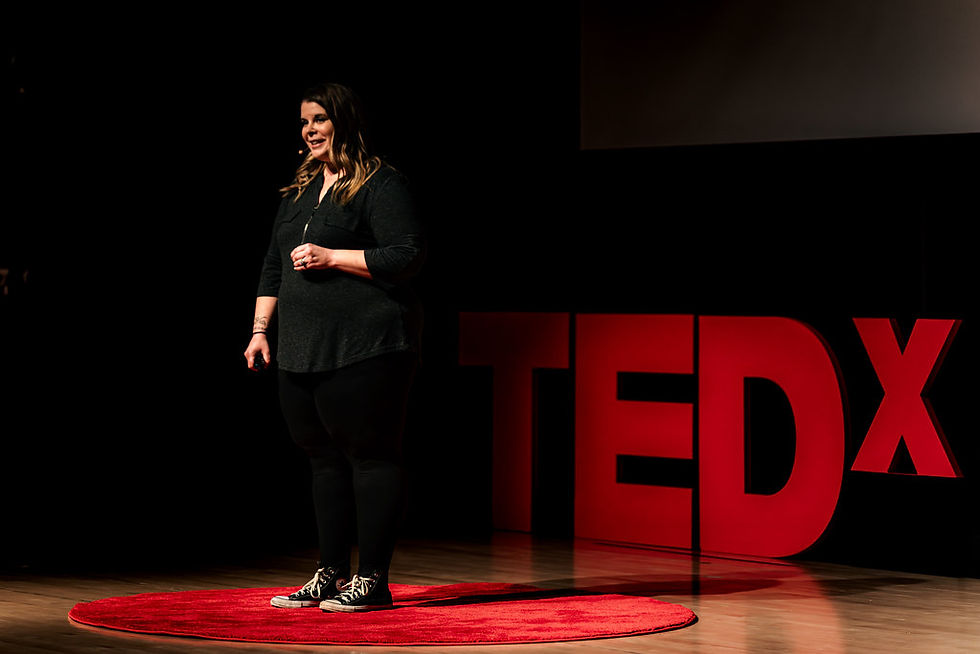
When I stood on the TEDx stage earlier this year, I realized the moments that resonated most weren’t the perfectly rehearsed lines. They were the honest ones. The vulnerable ones. The moments that felt unmistakably human.
For months leading up to the talk, I obsessed over every sentence. Every transition. Every pause. But after it was over, nobody came up to compliment my slide design (mostly because it didn’t work) or tell me how polished the presentation felt. They thanked me for being honest. And for being vulnerable.
They shared their own stories.
That’s when I realized connection has never come from perfection. It comes from authenticity.
Then came this summer.

I stepped into a role I never expected to love as much as I did: head softball coach.
I thought I was there to teach throwing mechanics, batting stance, and defensive positioning. Instead, I spent an entire season helping a group of girls rewrite the stories they believed about themselves.
“I’m not good enough.”
“I can’t catch.”
“I’m scared I’ll make a mistake.”
Week after week, I watched confidence slowly replace self-doubt. A player who hesitated to step into the batter’s box started asking for extra swings before a game. Another volunteered to try pitching for the first time. Girls who once apologized for making mistakes started encouraging one another instead.
By the championship game, those stories sounded very different.
“I can play anywhere you need me.”
“I want to pitch.”
“I did it. We did it.”
That transformation had very little to do with softball. It had everything to do with confidence and the stories we tell ourselves.
Why storytelling matters in communications
The same principle applies in public relations and communications. People rarely connect with organizations because they’ve memorized a list of statistics. They connect because they understand what an organization stands for, who it serves, and why its work matters.
The numbers support the story. They don’t replace it.

As I’ve settled into my new role in External Affairs, I've also been learning about Generative Engine Optimization (GEO) and how AI-powered search is changing the communications landscape. It’s fascinating work, and three themes keep appearing:
Authority matters.
Authenticity matters.
Experience matters.
For someone who has spent nearly two decades in communications, I find that encouraging.
Technology is changing quickly. The way people search for information is changing with it. But the foundation hasn’t changed. People—and increasingly AI—are looking for trustworthy voices. They’re looking for expertise backed by experience. They’re looking for content that teaches, informs, and genuinely helps.
Ironically, that brings us right back to storytelling.
Not storytelling that embellishes reality, but storytelling grounded in real experience, meaningful insight, and genuine expertise.
The common thread
Whether I’m writing a romance novel, developing a GEO-friendly communications strategy, speaking on a stage, recording a podcast, teaching students, or coaching a softball team, my goal is remarkably similar:
Help people feel something.
Help them understand something.
Help them see what’s possible.
That’s what stories have always done. And I think that’s why I’ve stopped trying to fit myself into one professional box.
I’m an author.
I’m a communications professional.
I’m a speaker.
I’m an educator.
I’m a coach.
At first glance, those roles don’t seem connected. But beneath every one of them is the same purpose: helping people connect through stories.
Because storytelling isn’t just for novelists.
It’s for leaders.
It’s for communicators.
It’s for educators.
It’s for coaches.
It’s for anyone who wants to make a lasting impact. And maybe that’s the greatest story of all.


Comments