
I cheated at personal branding—I built mine backwards

Six years ago, I started my author journey. I thought I was writing books—not building a brand. I wasn’t thinking about positioning, authority, content pillars, or how each new opportunity might reinforce the others. I was focused on learning how to write a novel, finding a publisher, connecting with readers, and figuring out what came next.
But recently, I took a step back and looked at everything I’ve built: published romance novels, awards, university teaching, corporate communications, speaking engagements, a TEDx talk, a podcast, newsletters, social media, and a growing interest in the intersection of storytelling, strategy, and AI.
That was when I realized something. Somewhere along the way, all those individual pieces had become a brand. Not one I carefully mapped out from the beginning. Not one built from a polished strategy document. It developed organically, one experience, interest, and opportunity at a time.
Sometimes we stumble into something we never intended to create—and later realize how grateful we are that we did.
My brand started long before I became an author
My author journey began six years ago, but the foundation of my brand was taking shape long before I wrote my first novel. It began when I chose a career in public relations and communications. It grew every time I helped an organization tell its story, taught students how to connect with an audience, stood in front of a room to deliver a presentation, or found the right words to make a complicated idea feel clear.
At the time, those experiences felt separate. Professional Julie worked in communications. Professor Julie taught college students. Creative Julie wrote romance novels. Speaker Julie shared ideas from a stage. But they were never truly separate. They were all connected by the same thing: storytelling.
Once I recognized that thread, I could see the larger picture. I wasn’t simply a romance author who also happened to teach and work in communications. I was becoming a storytelling professional whose expertise showed up in several different ways—including writing award-winning romance.
That distinction changed how I understood my own work.
Everything began feeding everything else
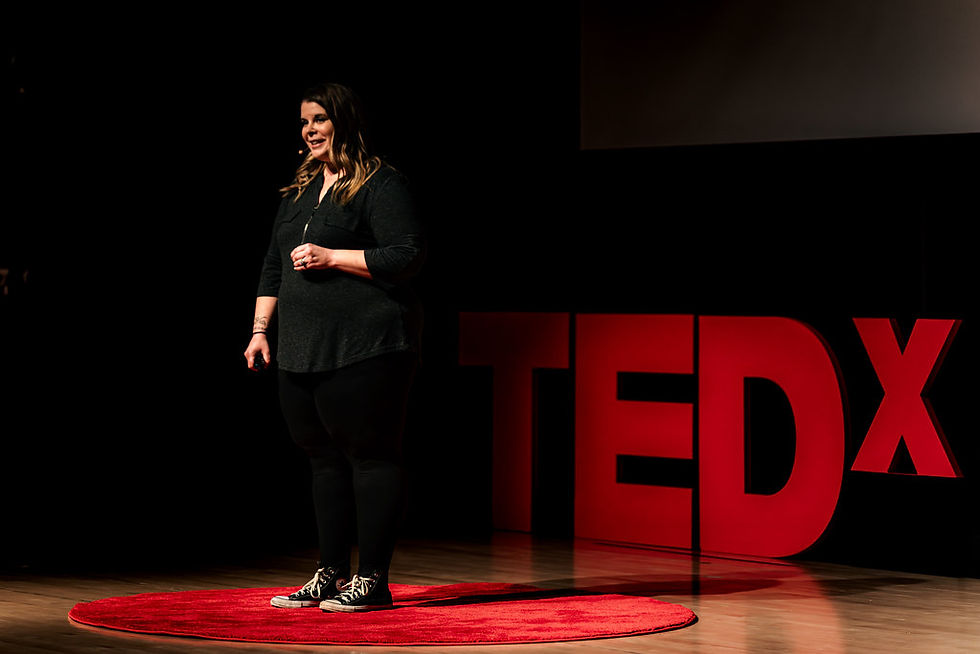
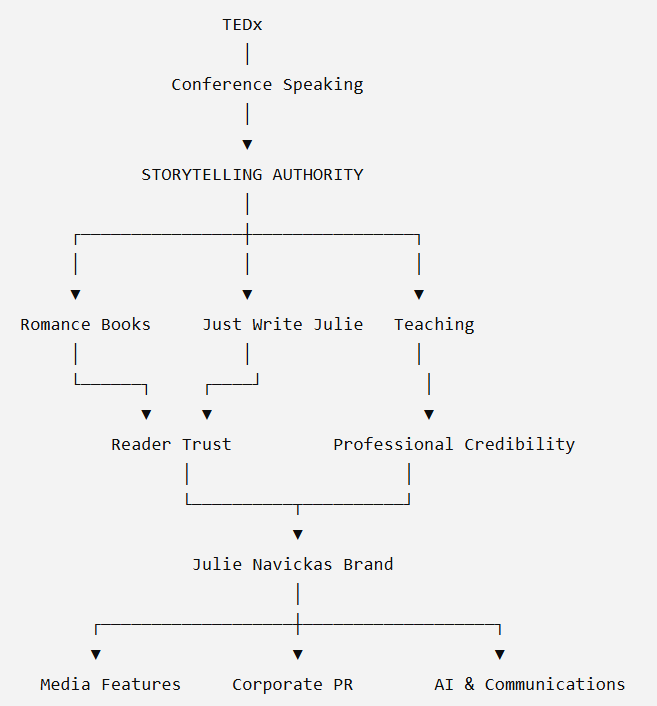
A strong brand doesn’t always grow in a straight line. Mine certainly didn’t. It grew more like a flywheel, with each part creating momentum for the others. Writing books gave me stories and experiences to share. Those experiences strengthened my teaching and speaking. Teaching helped me explain creative and strategic ideas more clearly. My communications career taught me how to understand audiences, develop messages, and build trust. Speaking introduced my work to new communities. My TEDx experience expanded my confidence and credibility. Launching Just Write Julie gave me another way to explore the place where writing meets strategy and creativity meets clarity. Social media and my newsletter allowed me to bring readers behind the scenes of all of it.
Every new opportunity added something to the others. The more I shared, the clearer the connections became.
Books led to speaking. Speaking supported teaching. Teaching strengthened my professional credibility. Communications informed the way I marketed my books. The podcast created space for new conversations, relationships, and ideas. None of those pieces weakened the others. Together, they made the brand more complete.
Authenticity became the strategy before I had a strategy
For a long time, I worried that sharing all my interests might confuse people. Would romance readers care that I teach event planning and communications? Would professional colleagues care about my novels? Would writers be interested in what I was learning about public relations, AI, or messaging strategy?
Traditional branding advice often encourages people to choose a narrow lane. There is value in clarity, but I’ve learned that clarity doesn’t necessarily mean reducing yourself to one title. Sometimes your brand isn’t a single lane. It’s the intersection where your lanes meet.
For me, that intersection includes:
Romance and emotional storytelling
Public relations and strategic communication
Teaching and mentorship
Speaking and thought leadership
Creativity, technology, and AI
Honest conversations about ambition, setbacks, and success
The connection isn’t a job title. It’s the way I approach the work.
I care about telling meaningful stories, helping people communicate with confidence, and making others feel seen. That remains true whether I’m writing a fictional love story, teaching a college class, interviewing a podcast guest, developing a communications strategy, or standing on a stage.
What once seemed like a collection of unrelated roles now feels like a distinctive advantage. Very few people occupy the exact same intersection because no one else has the exact same combination of experiences.
The same is true for you.
You may already have a brand—even if you haven’t named it
Your brand is not just your logo, website, color palette, or social media presence. Those elements can help communicate it, but they aren’t the brand itself. Your brand is the pattern people recognize across your work. It’s what you consistently care about. It’s the perspective you bring to the table. It’s the experience people have when they interact with you, read your words, hear you speak, or encounter your work.
If you’re trying to understand your own brand, start by looking backward before trying to build forward. Ask yourself:
What themes have followed me throughout my career and creative work?
What do people consistently ask me for help with?
What subjects can I discuss with both confidence and genuine enthusiasm?
Which parts of my background seem unrelated but actually reinforce one another?
What do I want people to feel after interacting with my work?
What opportunities have repeatedly found their way to me?
You may discover that your brand has been quietly developing for years.
How to build more intentionally without losing what makes it real
Now that I understand the ecosystem I’ve created, I’m more intentional about it than ever. But I don’t want strategy to erase the organic quality that made the brand mine in the first place. That balance matters. If you’re developing your own personal or professional brand, here are a few lessons I’ve learned.
1. Identify the thread, not just the titles
Your job titles will change. Your central strengths and values are more likely to remain.
Instead of introducing yourself only through your roles, look for the idea connecting them. My titles include author, communicator, instructor, speaker, and podcast host. Storytelling is the thread holding them together. So, when I introduce myself, I say, “Hi, I’m Julie, and I’m a storyteller.”
2. Let your interests intersect
You don’t always have to choose between the different parts of your identity. Your most distinctive positioning may exist where they overlap. The goal isn’t to share everything indiscriminately. It’s to understand how your interests support a larger, recognizable story.
3. Create work that reinforces other work
Think about how one effort can support several parts of your brand. A podcast conversation might inspire a blog post. A professional lesson might become a speaking topic. A classroom discussion might reveal a new way to explain an idea online. An author experience might become a meaningful example in a communications presentation.
This isn’t about endlessly repurposing content. It’s about allowing your knowledge to travel.
4. Build trust before chasing visibility
Visibility can introduce people to your work, but trust gives them a reason to stay. Trust grows through consistency, generosity, honesty, and follow-through. It develops when your public presence matches the experience people have with you privately.
Awards, credentials, media appearances, and speaking opportunities can strengthen authority, but they work best when they support a foundation that already feels genuine.
5. Share the process, not only the proof
A brand built entirely around accomplishments can feel distant. People may notice the published books, awards, podcast episodes, degrees, speaking engagements, or TEDx talk. But connection often happens in the space around those accomplishments—the uncertainty, revision, persistence, rejection, learning, and occasional chaos required to reach them.
Sharing the journey makes the outcome more meaningful.
6. Revisit your brand as you evolve
You are allowed to outgrow an old description of yourself. My brand today is broader and more intentional than it was six years ago because I am broader and more intentional than I was six years ago. Growth doesn’t mean the earlier version was wrong. It means it became the foundation for what came next (even if the foundation was the quiet girl in the back row).
Brand authority is built through accumulation
One of my biggest takeaways from reflecting on my own brand is that authority rarely comes from one defining moment. It accumulates. One book may lead to another. One class may sharpen an idea. One presentation may open the door to a larger stage. One podcast conversation may create a lasting professional relationship. One honest social media post may reach the person who needs to read it.
Individually, those moments might seem small. Over time, they begin to compound. That’s why the best way to build a brand may not be to ask, “How can I appear more credible?” A better question might be, “What meaningful work can I continue doing—and how can I help people understand the connection between it all?”
I’m still learning what this brand can become
I’m proud of what I’ve built, but I also know it’s still evolving. There are opportunities to expand my visibility, grow the podcast, deepen my connection with readers, speak to new audiences, and contribute more intentionally to conversations about storytelling, communications, and AI. I don’t have every next step mapped out.
Six years ago, I didn’t know writing a novel would lead me here. I didn’t know the different parts of my professional and creative life would eventually form something cohesive. I didn’t know I was building a brand at all. I was simply following the work that mattered to me. And maybe that’s the most important lesson. You don’t need to have your entire brand figured out before you begin. Start with what you care about. Do good work. Share what you’re learning. Pay attention to the themes that keep resurfacing. Let yourself evolve.
Then, every so often, pause long enough to look back. You just might discover you’ve been building something meaningful all along.


Comments