
First person vs. third person: Why I rewrote my backlist

When I first published my novels with small press publisher, Inkspell Publishing, I was proud of them—and I still am. Those books represent the writer I was at the time: ambitious, learning fast, and deeply in love with storytelling.
But writing is a living craft. And the more books I wrote, edited, revised, and studied, the more I realized something important: My voice has changed. Not in a subtle way. In a foundational one.
That realization is what led me to one of the biggest creative decisions of my career so far: re-releasing my Inkspell titles in first-person point of view instead of third. This wasn’t about fixing something “wrong.” It was about aligning my backlist with the writer I am now.
So, let’s talk about what I learned—about point of view, about craft growth, and about why first vs. third person matters more than we sometimes admit.
The power (and distance) of third person
Third-person POV is often where writers begin—and for good reason.
Pros of third person storytelling
Perspective flexibility. You can pull back, shift focus, and offer a wider lens on the story world.
Structural clarity. It’s often easier to track multiple characters and plot threads.
Emotional buffering. There’s a bit of space between the reader and the character, which can be useful for high-conflict or ensemble stories.
This was the version of storytelling I started with. Third person helped me learn pacing, scene structure, and character arcs without asking me to live inside my characters at all times. And honestly? That distance helped me feel safer early on.
Cons of third person storytelling
Emotional remove. Even in close third, there’s often a slight separation between reader and character.
Temptation to explain. Third person can invite over-clarifying—telling instead of letting readers feel.
Less immediacy. The story can feel observed rather than experienced.
As my writing matured, I started to notice that emotional beats I wanted to land sometimes felt muted on the page. Not wrong—just not as sharp as I knew they could be.
What first person taught me about my own writing
Switching to first person wasn’t just a stylistic change. It was a craft reckoning.
Pros of first person storytelling
Deep emotional immersion. The reader doesn’t just witness the story—they are the story.
Voice-driven storytelling. Every sentence carries character attitude, bias, and rhythm.
Higher emotional stakes. There’s no distance to hide behind. Every fear, hope, and flaw is front and center.
Writing in first person forced me to sharpen my instincts:
To trust subtext instead of explanation
To let silence do some of the work
To lean into vulnerability rather than summarize it
I learned how much power lives in what a character notices—and what they don’t.
Cons of first person storytelling
Limited scope. You only know what the narrator knows.
Voice fatigue risk. The voice must be strong enough to sustain the entire novel.
No authorial safety net. If the emotion doesn’t land, there’s nowhere else to put it.
But by the time I began revisiting these books, that challenge excited me instead of intimidating me. And that’s how I knew it was time.
Why I chose to rewrite—not just revise
This re-release isn’t about chasing trends or reinventing my past. It’s about integrity.
I’ve spent years:
Teaching writing and communication
Revising dozens of manuscripts
Recording audio, podcasting, and living inside spoken voice
Studying how intimacy on the page translates to emotional resonance
First-person storytelling now mirrors how I think in story. How I feel my characters. How I want readers to connect. And my backlist deserves to reflect that evolution.
The re-release schedule
I’m starting with The Trading Heartbeats Trilogy, fully rewritten in first person with deeper emotional layering, cleaner pacing, and a voice that feels unmistakably mine.
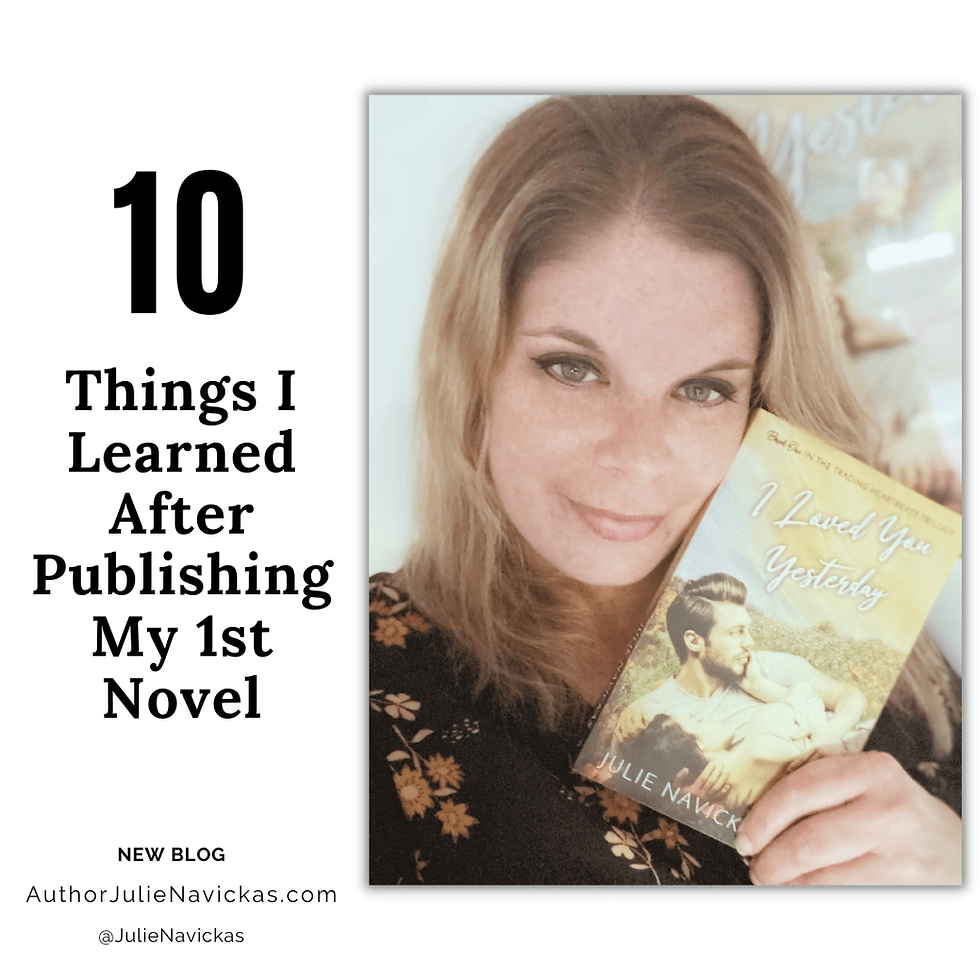
I Loved You Yesterday — March 17
I Love You Today — April 14
I’ll Love You Tomorrow — May 26
More details—and the Clumsy Little Hearts updates—are coming soon.
Final thoughts
Point of view isn’t just a technical choice. It’s a relationship contract between writer and reader. Third person taught me how to tell stories. First person taught me how to let readers live inside them. And that’s the experience I want my books to offer—now and going forward.
If you’re a writer wondering whether your earlier work still reflects your voice, I’ll say this: Growth doesn’t erase your past. It honors it—by building on it.

Comments