
Eldest daughter core: For the girls who learned to need less

I don’t walk into a room and decide to scan it—it happens automatically. It’s who I am after nearly forty years of conditioning. I notice who needs something before they say it. I see what hasn’t been done. I feel where the tension sits. And I know how to fix it—quietly, efficiently, without being asked.
I don’t even think about it. I just… do it. Because I’m an eldest daughter. And that wiring doesn’t just disappear when you grow up. It follows you. It evolves with you.
This didn’t stay in childhood

I wish I could say this was something I used to experience. But it isn’t. It shows up in adulthood in ways that are harder to name, because now it looks like competence. Leadership. Being someone people can always count on.
But underneath that? It still feels like responsibility I didn’t choose. I’m still the one expected to do more. Be more. Carry more. Still the one who anticipates needs before they’re spoken. Still the one who smooths things over. Still the one who feels a subtle, persistent pressure to hold everything together.
And the hardest part? People don’t always see it as pressure. They see it as who you are. They see it as who I am.
The truth I’ve had to sit with
I learned early that being “good” meant being easy. Easy to rely on. Easy to lean on. Easy to praise. I was the exceptional student. The over-achiever. The perfectionist. The helper. The organizer. The one who didn’t need much. And for a long time, I wore that like a badge of honor. Until I realized something that changed everything: Being easy to lean on is not the same thing as being deeply cared for.

That realization didn’t come all at once. It came slowly. Uncomfortably. In moments where I felt exhausted but couldn’t explain why. In relationships where I gave more than I received. In expectations I kept meeting without ever questioning if they were mine to meet. And eventually, I had to ask myself: Who decided this was my role?
What I said out loud in 2024
In 2024, I stood on the That's What She Said stage and said something I was never allowed to say: We don’t owe our families anything. We don’t owe them access to every part of us. We don’t owe them our exhaustion. We don’t owe them unconditional love at the expense of ourselves. And most importantly, we are not responsible for the actions, choices, or emotional regulation of the people who raised us.
Children do not enter this world in debt to their parents. But as parents? We owe everything to our children. That was the line that split something open in me. Because for so long, I had internalized the opposite—that being a good daughter meant carrying what wasn’t mine. That love meant absorbing impact. That responsibility didn’t have a boundary.
And then I started to understand something that reframed everything: a responsible parent isn’t the most obedient adult child. A responsible parent is someone who stops living by inherited expectations—who builds their own life, trusts their own intuition, and chooses to live authentically.

Because our children don’t need us to disappear for them. They need us to be whole in front of them. They need to see what it looks like to have boundaries. To trust yourself. To live a full life—not one built on quiet sacrifice.
That’s the shift. Not from selfish to selfless. But from self-abandonment to self-trust. And once I saw that, I couldn’t unsee it.
That stage and that speech was a rebellion for me. Because eldest daughters are often raised to believe that love looks like sacrifice. That being a good daughter means being endlessly available. That boundaries are selfish. That you stay, you give, you fix—no matter the cost.
But I don’t believe that anymore. Love can be real and still have limits. Care can exist alongside boundaries. And choosing yourself does not make you disloyal. If anything, it makes you honest.
I think the Boomer generation missed that memo. Or maybe they were never given the language for it in the first place. But Millennials? We’re reading it loud and clear. We’re questioning inherited roles. We’re rejecting the idea that love requires self-abandonment. We’re learning that breaking a cycle sometimes looks like disappointing people who benefited from it. And we’re choosing differently—for our children.
Turning forty & flipping the script
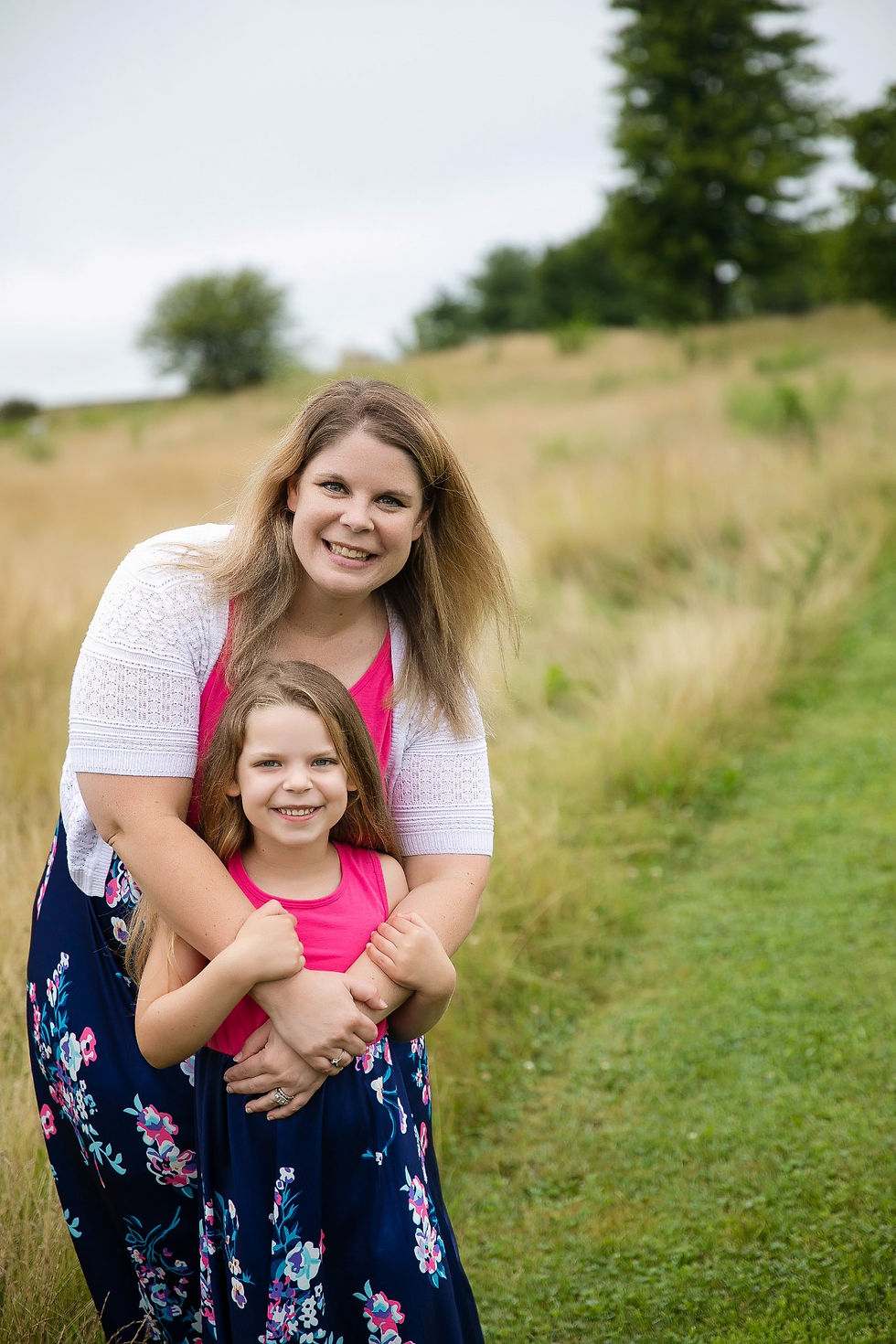
I turn forty this year. And I can say, without hesitation, that so much of what I used to believe has been flipped completely upside down. I used to believe:
That my worth was tied to how much I could carry
That being needed meant being valued
That being the strong one was something to be proud of
Now I see it differently. Now I know:
My worth is inherent—not earned through over-functioning
Being needed is not the same as being loved
Strength without boundaries isn’t strength—it’s barely survival
That shift hasn’t been easy. It has required unlearning decades of conditioning. Sitting with discomfort. Letting people misunderstand me. But it has made me a better person. A more honest one. A more grounded one. And without question—a better parent.
Because motherhood made it personal

Motherhood didn’t just change my life. It changed how I see my own childhood. Because now I look at my daughter—and I see her. Not as who she can become. Not as what she can do. But as who she is, right now. And I refuse to let her carry what I carried.
She will never be expected to do more than her two younger brothers. Not because she isn’t capable (she absolutely is). But because capability should never become obligation.
She will not be the built-in helper. She will not be the emotional buffer. She will not be praised for needing less. She will be allowed to need. To rest. To be messy. To be fully, unapologetically a kid.
Healing looks like this
I think a lot of us Millennials are realizing the same thing at the same time: We weren’t supposed to be second mothers. We were supposed to be children. And maybe healing doesn’t look like rewriting the past. Maybe it looks like changing what comes next. Maybe it looks like:
Saying no without over-explaining
Letting go of roles we never agreed to
Redefining what love and loyalty actually mean
Giving ourselves permission to stop over-functioning
And maybe most importantly—raising children who don’t have to unlearn their childhoods.
My pledge

To my daughter, Lily,
This is where it lands for me. Not as a theory. Not as a trend. But as a promise I am making to you—every single day.
I will not pass this down to you. Not the pressure. Not the expectation. Not the quiet belief that love has to be earned through sacrifice.
You will never be responsible for holding everything together. You will never be expected to carry more just because you can. You will never have to become everything for everyone else at the expense of yourself.
You don’t have to earn your place in this family. You already belong.
I want you to grow up knowing that your needs matter. That your voice matters. That your worth is not tied to how much you do for others or how little you ask for in return.
And I’m learning—still, actively, imperfectly—that I don’t have to be everything for everyone either. That I am allowed to set things down. That I am allowed to choose myself, too.
Because we don’t owe our families our depletion. We don’t owe them versions of ourselves that come at the cost of who we are. We are allowed to choose a different way.
So, I’m choosing it—for you. And, finally, for me. And at (almost) forty, I mean that in a way I never have before.
Love Mom


Comments